

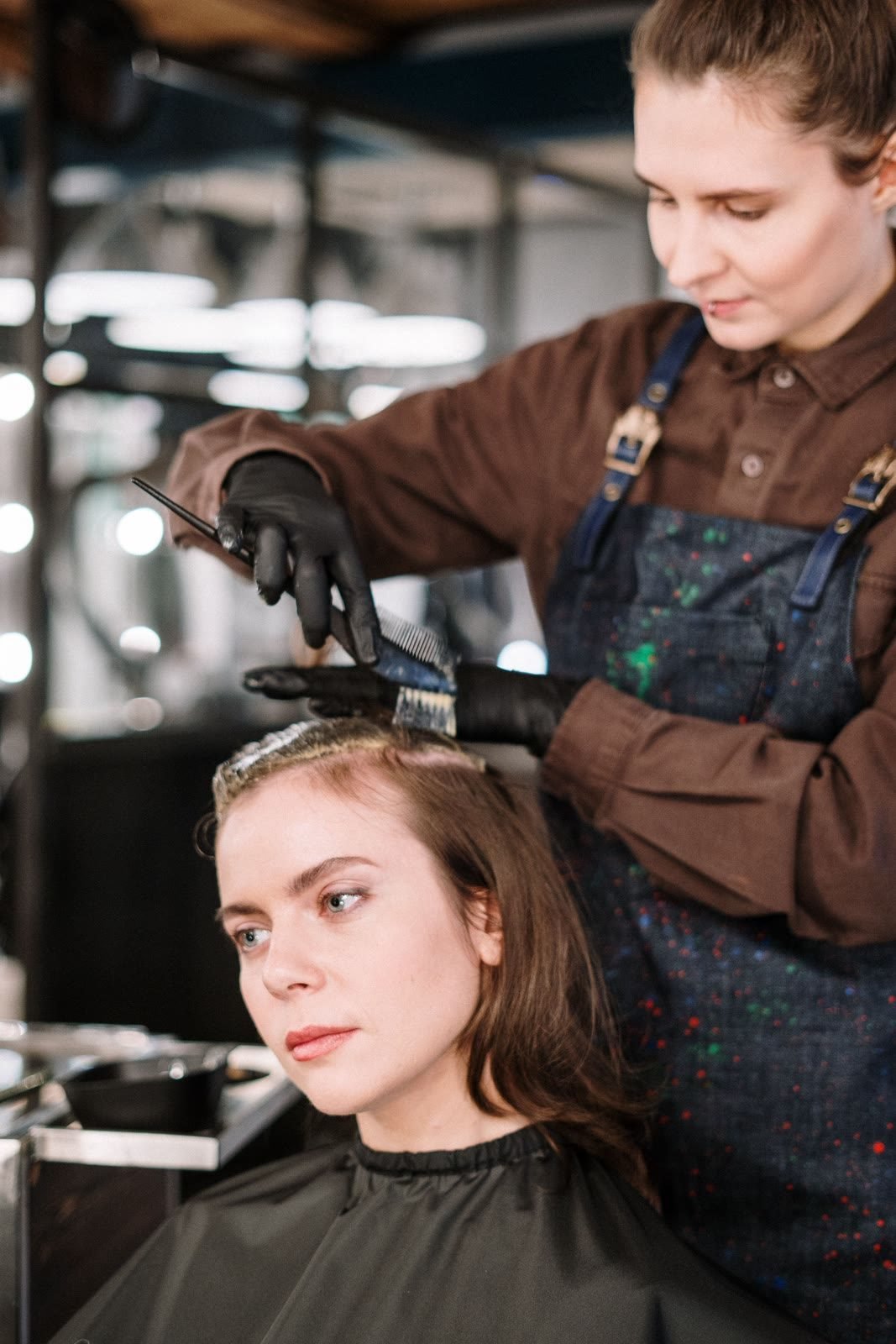

The Technique, In Short
Highlights are foiled sections of hair lightened in a uniform, structured pattern — the classic technique for consistent, all-over dimension. Balayage is hand-painted freehand, sweeping colour onto the surface of the hair for a softer, sun-kissed gradient that grows out gracefully.
The foil is doing more than holding product in place. It traps heat, which drives the lightener further and faster, and it isolates each section so the result is even and repeatable. Balayage has no foil and therefore no trapped heat, which is precisely why it lifts more gently and why the transition between lightened and natural hair is so much softer.
What Actually Happens To The Hair
Both techniques lighten by opening the cuticle and removing pigment, so both have a cost. The difference is where that cost lands. Foils place lightener from very close to the root, so with each appointment the previously lightened hair is being lifted again in the overlap zone. Balayage is painted from further down and feathered upward, so the same section is rarely processed twice.
Over three or four years of regular appointments, this compounds. It is the single biggest reason a client who has had balayage for a decade often has healthier mid-lengths than one who has had foils for the same period, even though both left the salon looking equally good on day one.
Maintenance: The Real Difference
This is where the two techniques truly diverge. Highlights create a defined regrowth line, typically needing a touch-up every six to eight weeks. Balayage is designed to grow out softly, often stretching to twelve or even sixteen weeks between salon visits — a meaningful difference if your calendar or your budget is tight.
Be realistic about this before you choose. A client who genuinely cannot get to a salon every eight weeks will be unhappy with foils by week eleven, no matter how beautiful the result was on the day. Choosing a technique you can actually maintain matters more than choosing the one that looks best in the chair.
The Part Nobody Mentions: Toner
Lightening removes pigment but it does not create a finished shade. What you are actually seeing in the reference photograph you brought in is almost always the toner sitting on top of the lift, and toner is the component that fades first — typically within four to six weeks regardless of technique.
This is why hair that looked beautifully cool and expensive when you left can look brassy by the second month. It usually does not mean the colour was done badly. It means the toner has washed out and the underlying warmth that was always there is showing through again. A gloss appointment costs a fraction of a full colour and resolves it in half an hour.
Which Should You Choose?
If you want maximum, uniform brightness — especially on darker bases — highlights deliver more contrast per session. If you want an effortless, lived-in glow that doesn't demand constant upkeep, balayage is very likely your answer. Many of our clients now choose a hybrid: foiled highlights around the face, hand-painted balayage through the lengths.
That hybrid is genuinely the most requested approach in our studio at the moment, and for good reason. The foils give brightness exactly where it frames the face and where you notice it in the mirror, while the balayage through the back and lengths keeps the grow-out soft and the appointments further apart.
Before Your Appointment
Bring reference photos to your consultation — not to copy exactly, but so your colourist can read the underlying technique and adapt it to your natural base, texture and face shape. Bring two or three rather than one; the thread running through them tells us far more than any single image does.
And be honest about your colour history, including anything applied at home. Box colour, henna and previous black dye all change what can safely be achieved and how long it will take. We are not asking in order to judge the decision — we are asking because it genuinely determines whether we can reach your goal in one appointment, three, or at all.